
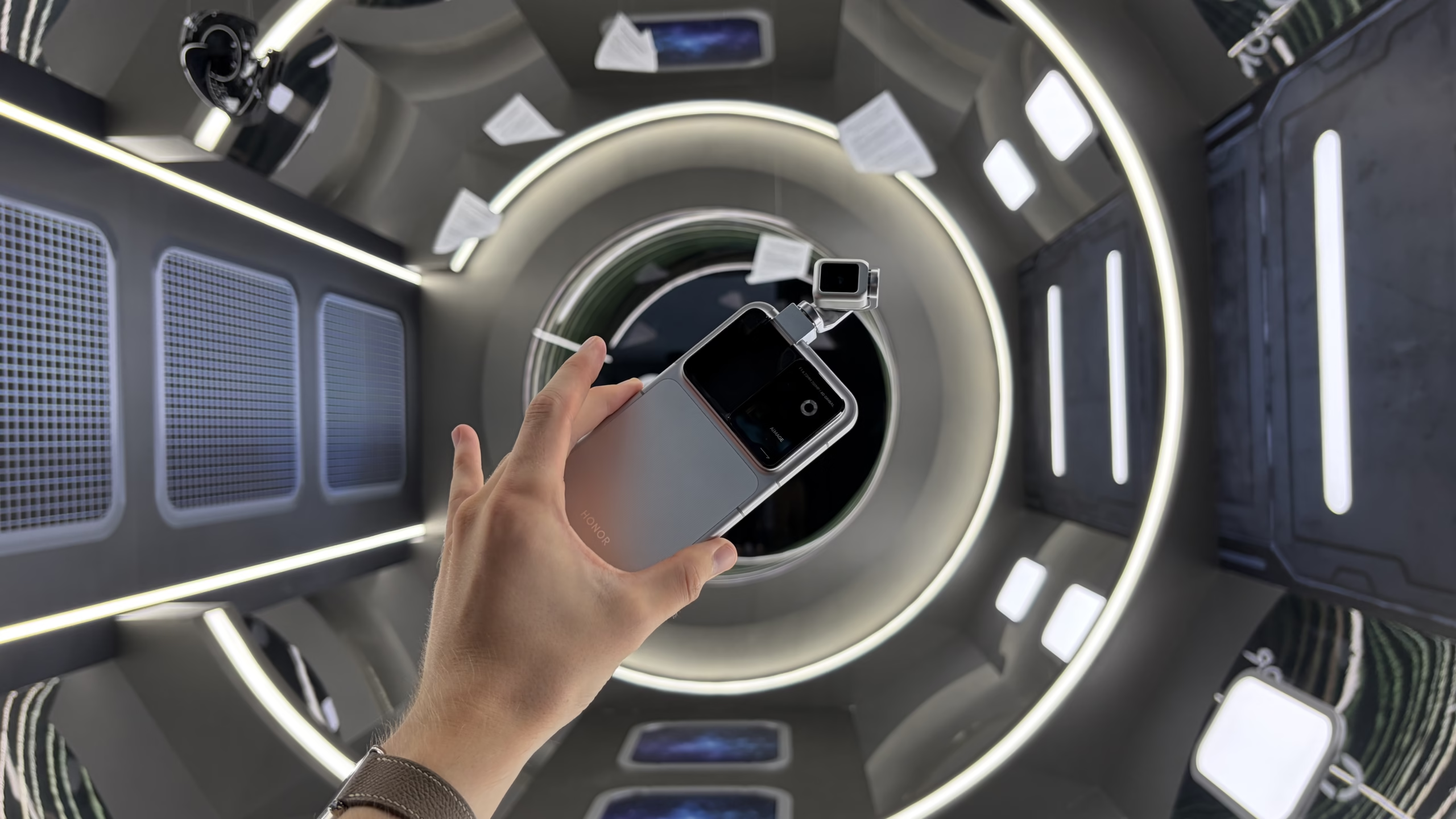
First there was the phone. Then there was the iPhone. And now, according to Honor, there is the Robot Phone — a “revolutionary, category-creating device that shatters the physical boundaries of traditional mobile technology.”
Now look, I love to call out marketing department hyperbole as much as the next journalist, but notwithstanding its description as the evolutionary successor to Apple’s greatest-ever product — sell 3 billion units, then we’ll have that conversation — the Chinese tech company is right to position the Robot Phone as something wholly different to what’s come before.
No smartphone I’ve ever come across features a fully motorized, three-axis mechanical gimbal built directly into its chassis, nor such a comprehensive suite of professional-grade camera features, some of which are autonomously controlled by a physically expressive AI agent (it even has a name: YOYO). We’re in full The Hitchhiker’s Guide to the Galaxy territory here, and while the Robot Phone may never become as mainstream as the iPhone, it most definitely is as revolutionary as Honor wants us to believe.
First teased in October 2025, the Robot Phone appeared in prototype form at MWC 2026, before finding its way to the Cannes Film Festival and, more recently, the World Cup final (Spain’s Eric Garcia was spotted filming with the device). Now, it’s officially launched in China, and I was among the first group of journalists permitted to hold, capture, and critique the Robot Phone at its extravagant Shenzhen showcase.
Gimme, gimme, gimme a gimbal
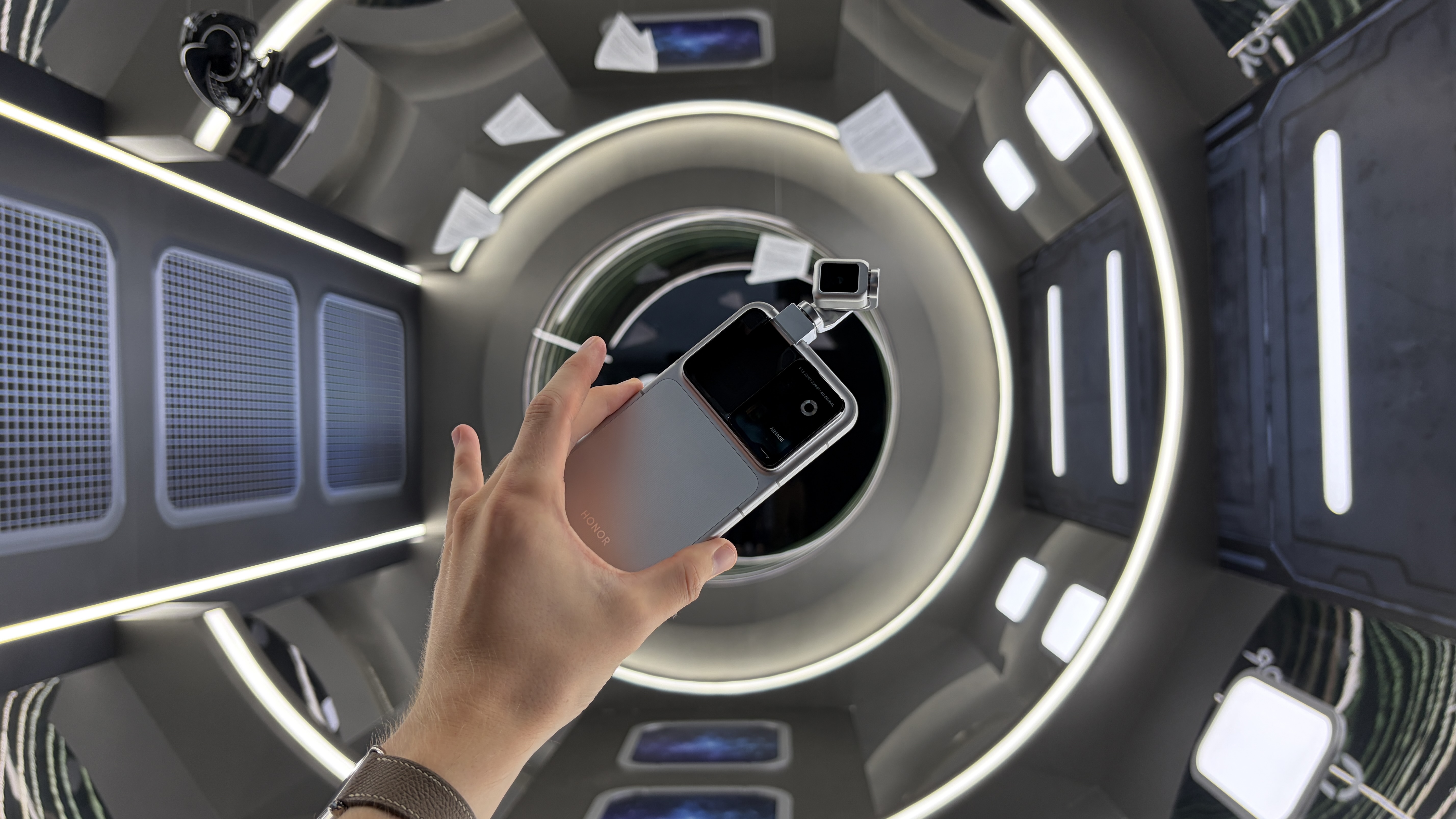
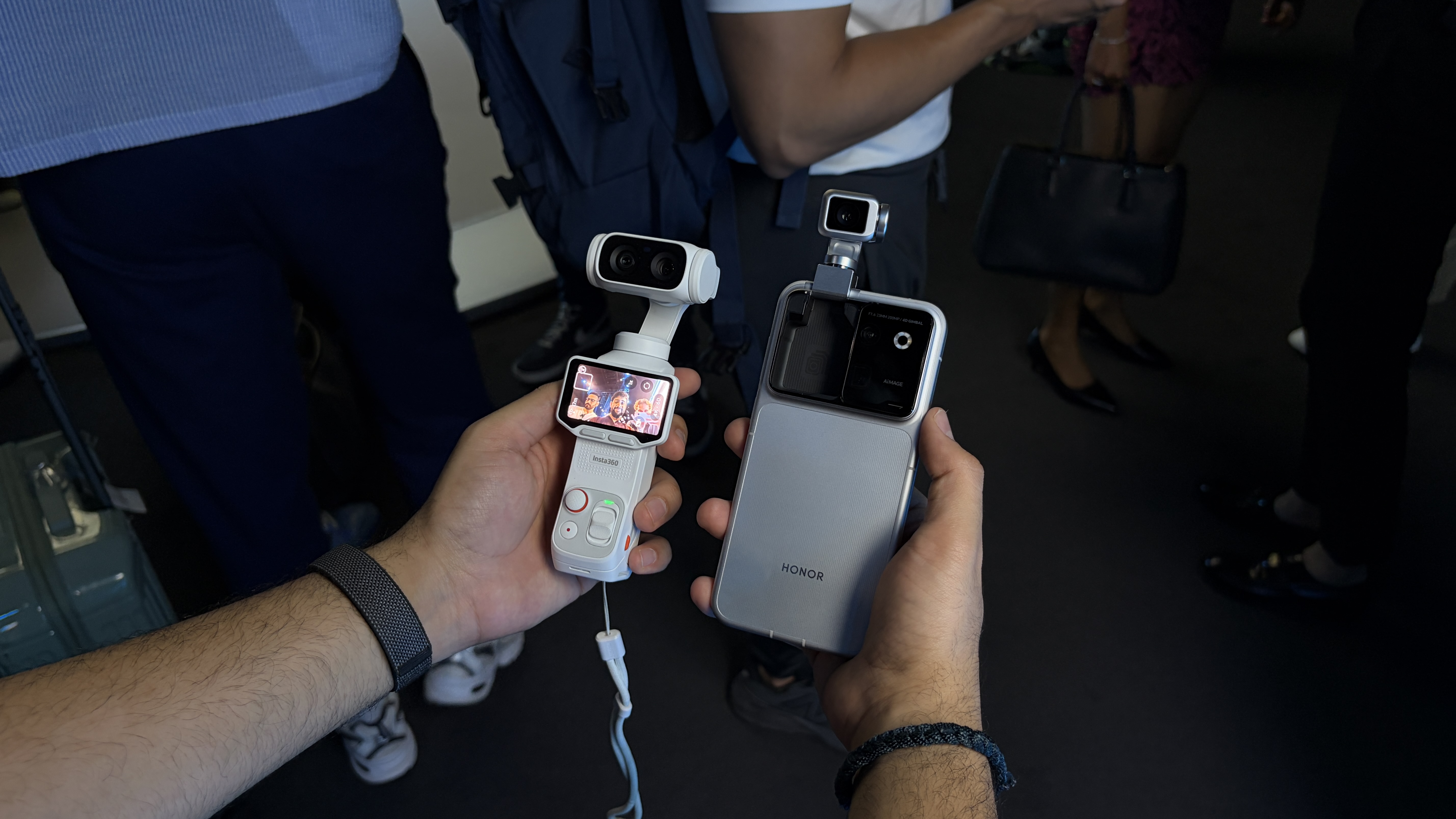
Let’s start on that gimbal, which marks the Robot Phone out as something entirely different from any of the best phones money can buy in 2026. It really is as if Honor has strapped a DJI Osmo Pocket to its flagship Magic 8 Pro, except the gimbal in question can tuck itself away into the phone’s rear panel when not in use, almost like an S Pen slipping discreetly into a Samsung Galaxy S26 Ultra.
Why would you want a gimbal attached to your phone? For several reasons. There’s the improved video stabilization, which results in steadier footage; the manual 360-degree control of the gimbal camera itself; the AI-powered subject tracking; or even the many automatic shooting modes like AI SpinShot (a 90- or 180-degree camera roll) and Tilt Locked (which locks the phone’s gimbal at your chosen angle).
This is no knock-off gimbal, either. Honor says the Robot Phone’s mechanical gimbal system — which features more than 100 individual components — is some 65% smaller than mainstream gimbal systems like the Osmo Pocket, and its structure is 200% stronger as a result. The gimbal motor itself weighs just 2.6g and facilitates movement speeds of up to 360 degrees per second, while a dedicated Flip Motor delivers a torque density of 120 Nm/L.
Full disclosure: I did not know what the torque density meant before seeing the Robot Phone for myself, but I now know it’s a measure of how much twisting force a motor can produce relative to its size. A figure of 120 N·m/L is, apparently, very good — it means the Robot Phone’s motor is powerful enough to turn the gimbal with speed and precision, despite being small enough to fit snugly into the phone’s rear camera module.
And good news! This mechanical gimbal system works very well. I was skeptical about how effective a phone-mounted gimbal could possibly be, but after playing around with the Robot Phone’s various shooting modes, it produces dynamic, professional-grade footage — or at least footage that’s comparable to what you can achieve with larger, dedicated gimbals like the DJI Osmo Pocket. The key distinction, of course, is that the Robot Phone doesn’t ask you to walk around with (or purchase) a separate gimbal.
The gimbal camera is a 200MP 1/1.28-inch sensor with an f/1.6 aperture, supporting up to 4K video with special recording formats like LogC3 and ARRI Cinema. The latter comes as a result of ARRI’s partnership with Honor on the Robot Phone; the German brand — known for producing motion picture film cameras — lends its expertise to help bring Hollywood-grade color science to Honor’s smartphone pipeline.
Not to get too technical, but Honor says the Robot Phone performs noise reduction earlier in the RAW domain, processes data in 14-bit 4:4:4, and outputs 10-bit LogC3 and 4:2:2 video, preserving more usable image information for post-production. ARRI LogC3, meanwhile, preserves more highlight and shadow, while ARRI Wide Gamut 3 provides a broader color spectrum.
If that sounds like a foreign language to you, that’s because the Robot Phone is absolutely intended for video creators, rather than regular folk; its video stabilization capabilities are certainly useful for everyday shooting, but for me, they’re not leagues ahead of what you’ll get from software-based stabilization features in other phones, like Apple’s Action Mode or Samsung’s Super Steady with Horizontal Lock. The real juicy benefits are those post-production features, which were hard to capture and quantify in my short hands-on session, but were certainly present.
Say ‘hello’ (again) to YOYO
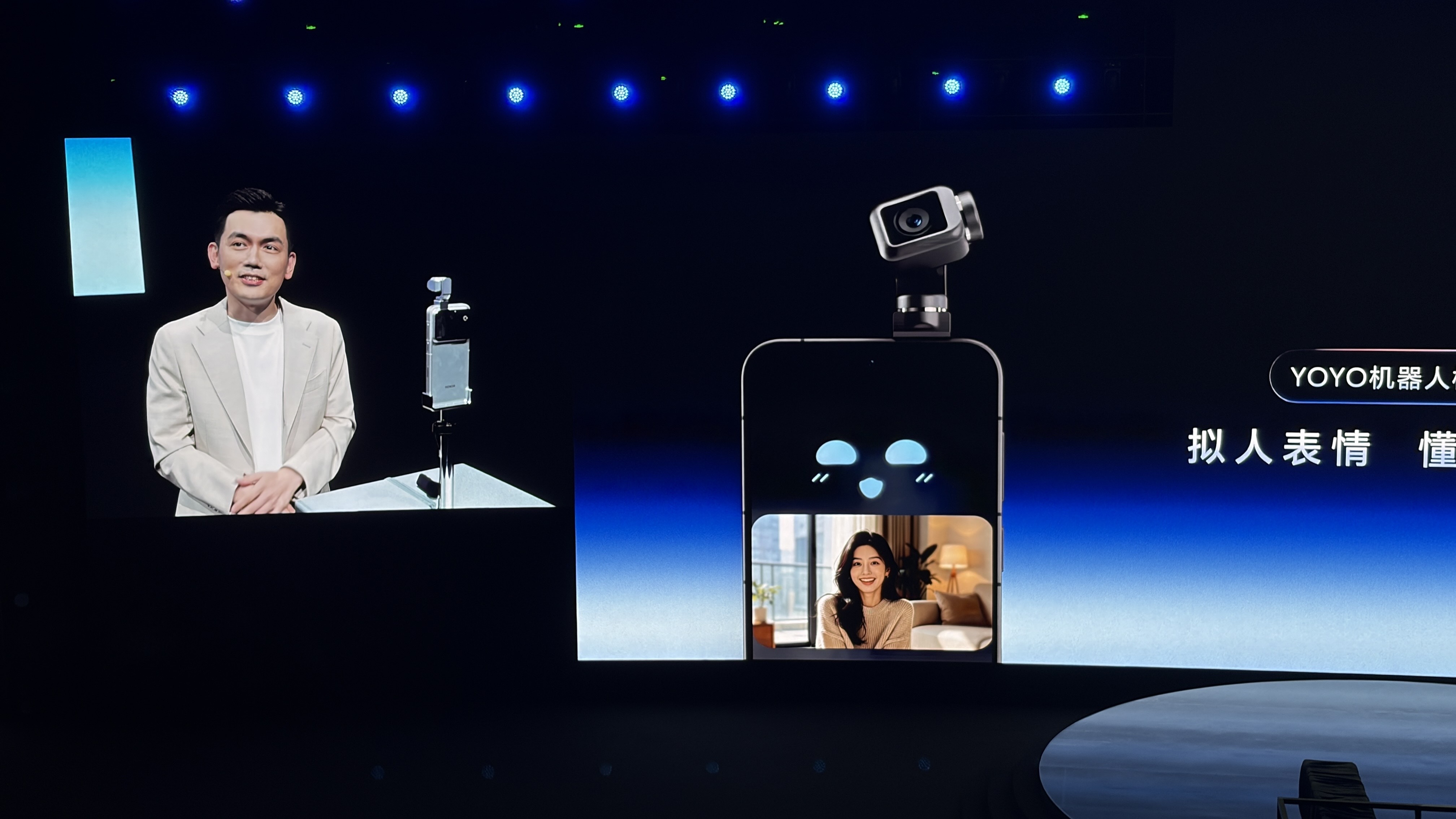
I did, however, get a taste of the Robot Phone’s YOYO agent. This agentic assistant initially debuted on the Magic 8 Pro in China as a tool for carrying out cross-app smartphone tasks on your behalf — it’s not dissimilar to Google’s Gemini Intelligence feature in that way — but on the Robot Phone, YOYO uses the existence of a gimbal to express itself physically. At launch, YOYO can nod, shake its (gimbal) head, dance to music, and perform other motorized oddities, which are complemented by over 100 on-screen facial expressions.
The desired effect is that YOYO feels like a physical companion in your pocket, unlike any other smartphone-based assistant on the market. The reality is that these physical gestures and on-screen expressions are the definition of gimmickry, though the ability to give YOYO gimbal-related commands using natural language — “turn left 45 degrees” or “turn around for five seconds,” for instance — is genuinely useful, and worked well.
Outside of its gimbal and YOYO agent, the Robot Phone is every bit a 2026 flagship. It’s got a 6.3-inch display; it measures just 9.59mm thick (for context, that’s less than 1mm thicker than an iPhone 17 Pro Max); there’s a Snapdragon 8 Elite Gen 5 chipset, a sizeable 7,060mAh battery, and two additional flagship-grade cameras (a 200MP telephoto and 50MP ultra-wide).
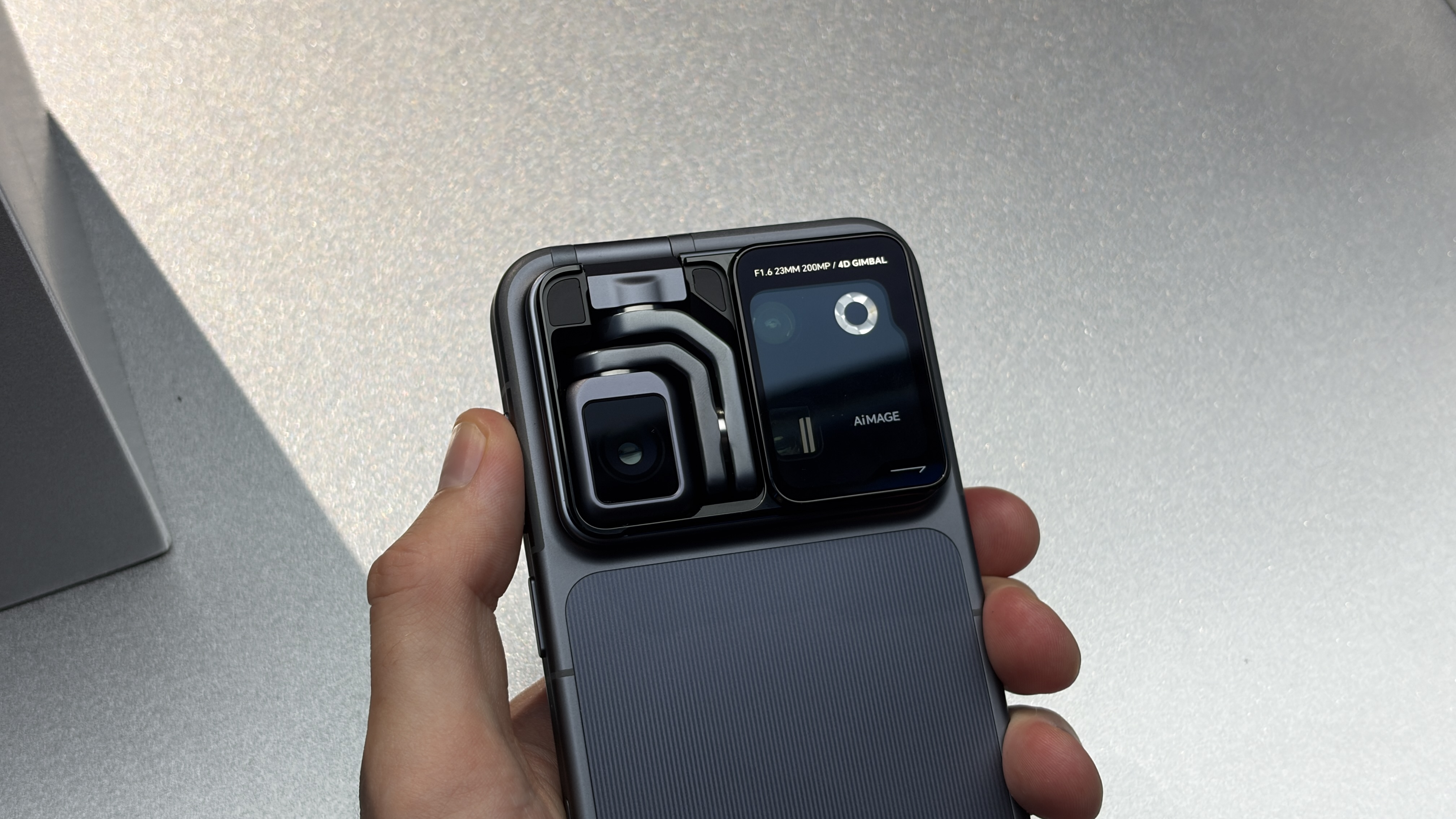
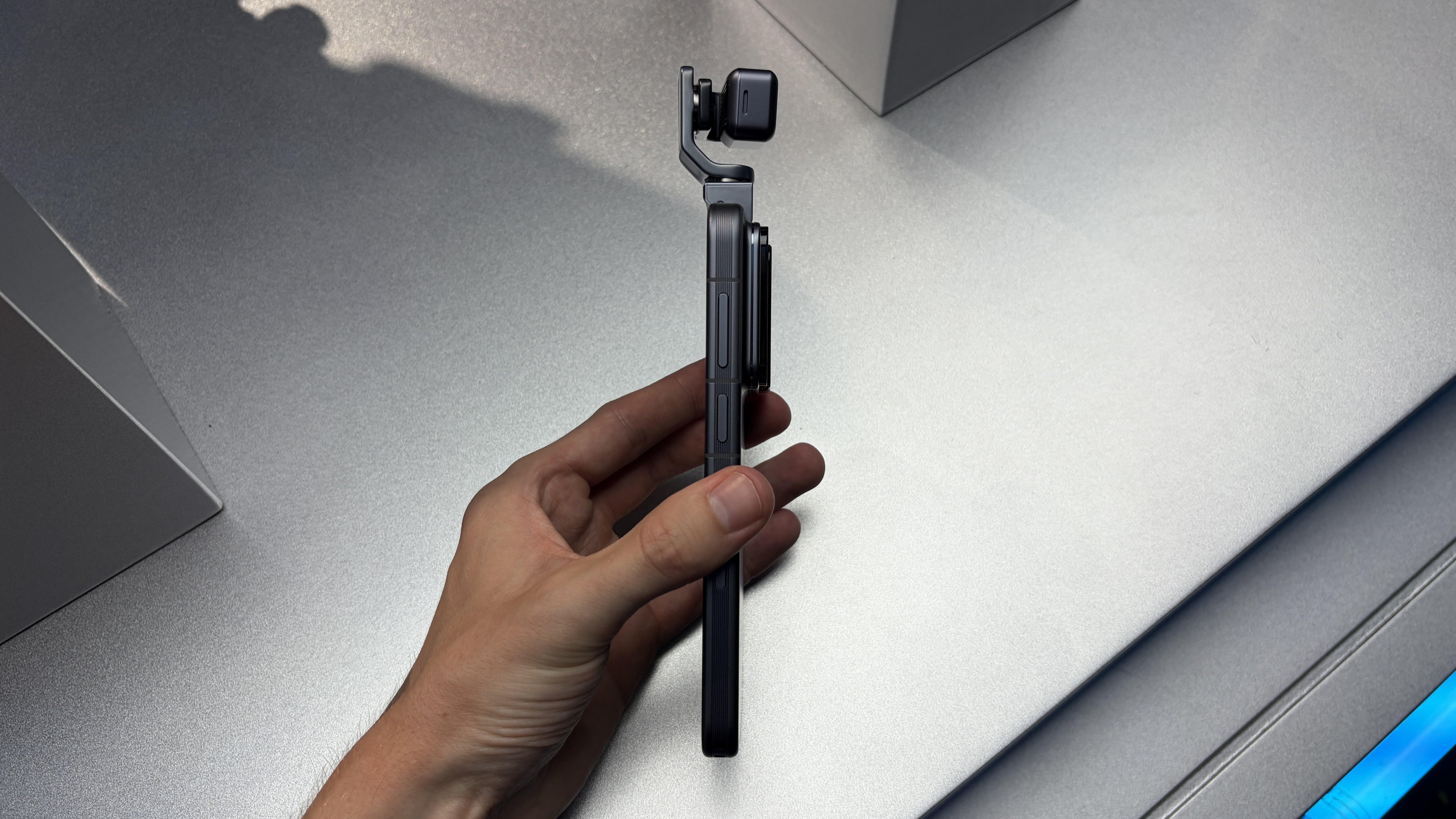
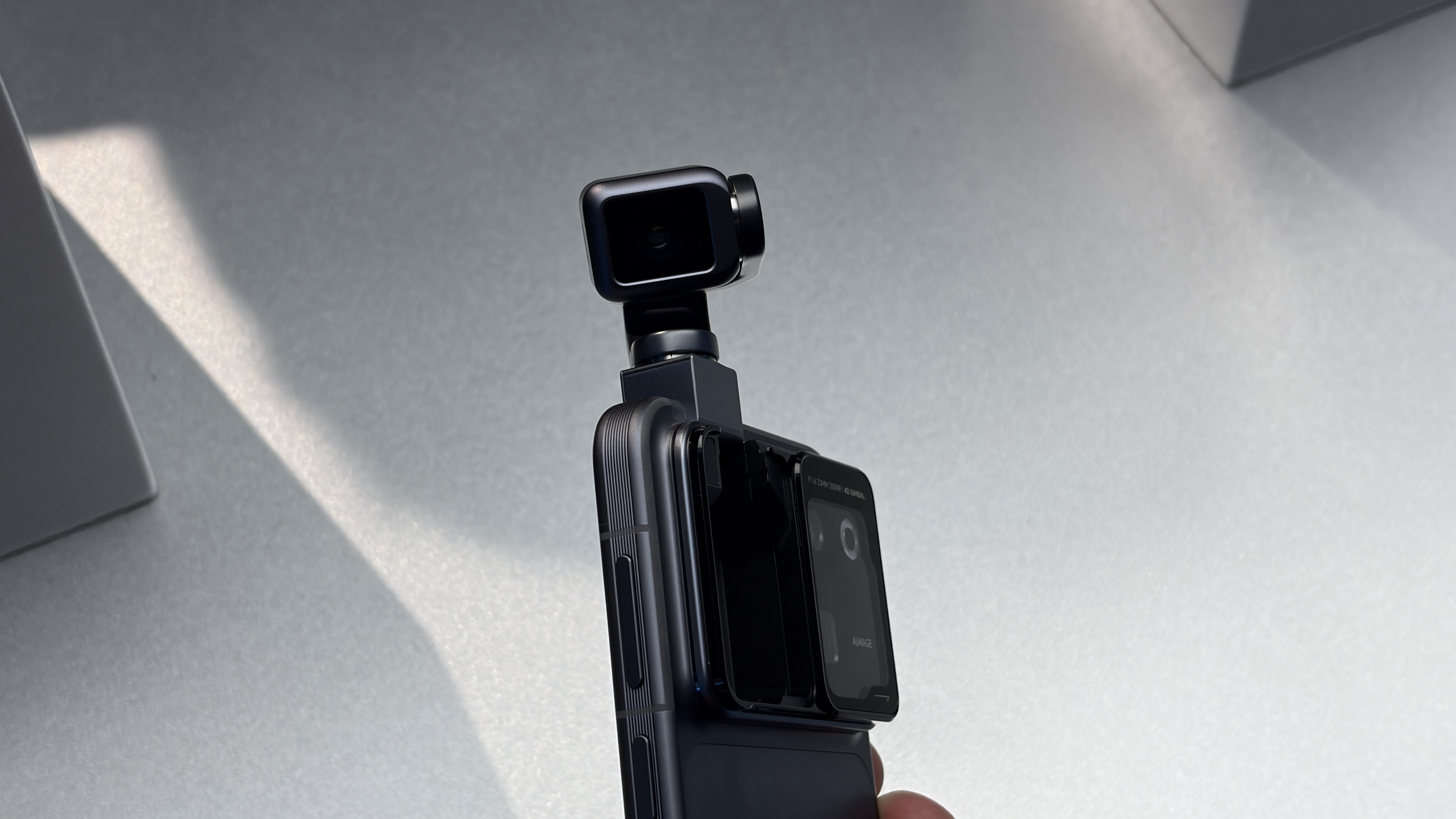
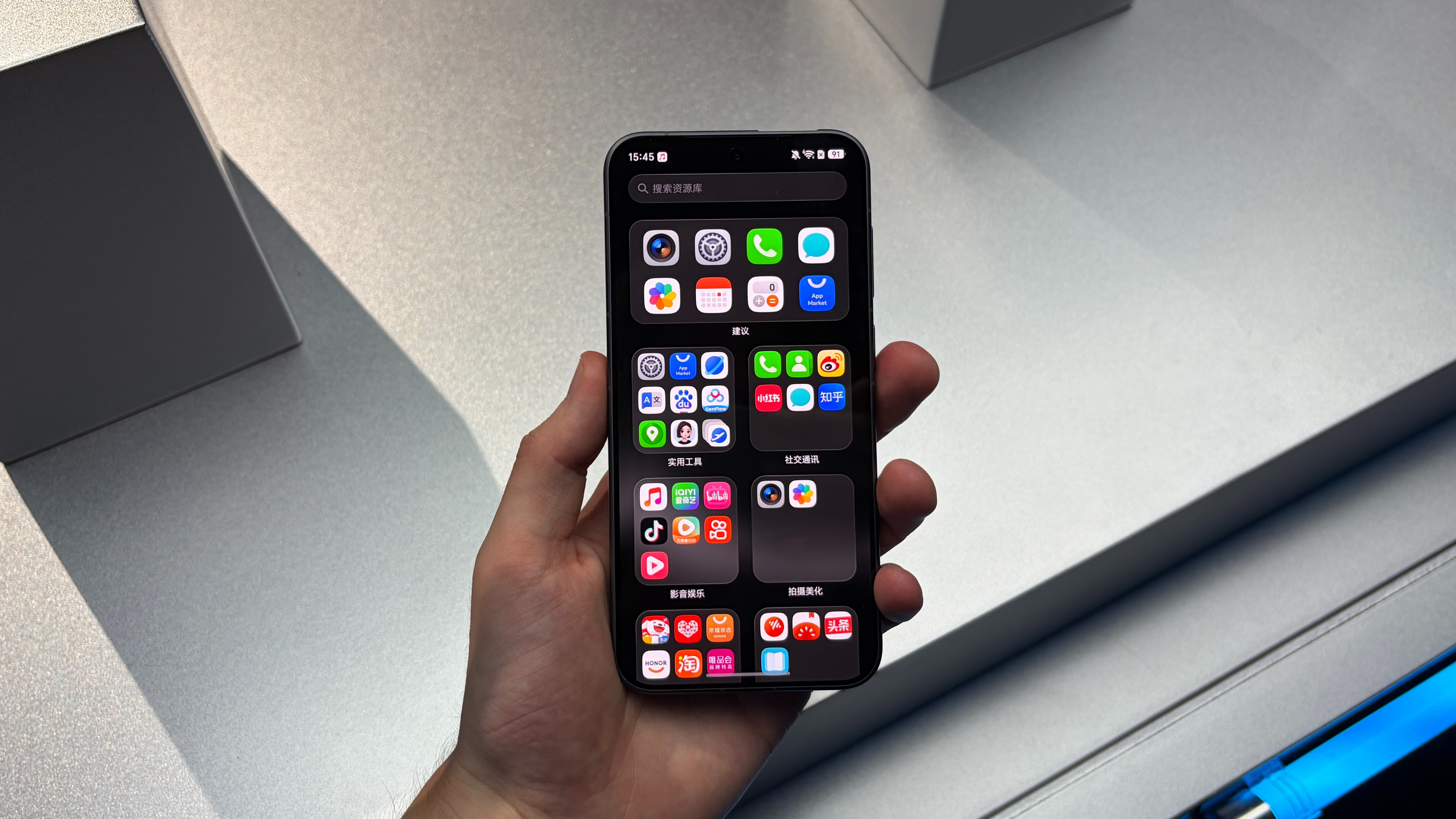
In the hand, the Robot Phone doesn’t feel too dissimilar to existing 6.3-inch phones on the market, which is quite the feat given that there’s a full-on gimbal on offer here. That said, I’m not sure how well that gimbal is going to hold up to real-world use — I felt, for instance, like I could easily (or accidentally) snap off the plastic shield covering it. And that’s to say nothing of its vulnerability to dust and debris when fully extended.
But none of this really matters. The Robot Phone is not meant to be treated like a regular phone, because it is not a regular phone. Heck, almost nobody reading this can even buy it. It’s a ridiculous, remarkable product that should be thought of more like the Samsung TriFold — i.e., an example of what’s technologically possible — than as a genuine disruptor to an industry that foldable phones have barely managed to dent.
The Robot Phone is essentially Honor saying, “Look at what we’ve been able to do with technology,” and I don’t think there’s anything wrong with that. To have brought a fully functioning robotic phone to market is no mean feat, and it’s exciting to see and touch a device that’s so drastically different from the phones we’ve become used to.
In many ways, the Robot Phone is like one of those outlandish gadgets from science fiction movies. And using it made me feel like a kid again.