
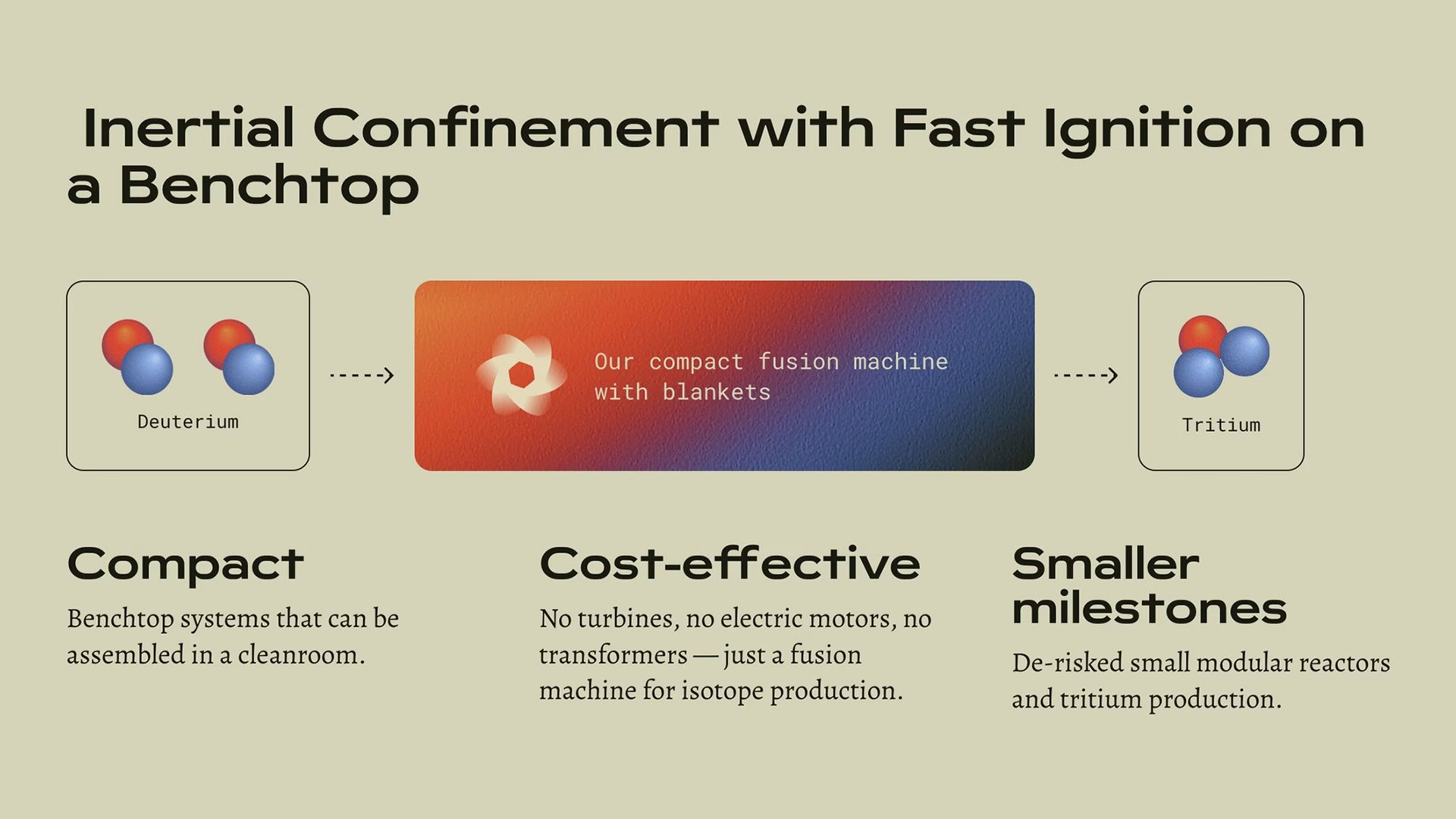
Nuclear fusion is how stars (including our own Sun) create their energy, and scientists are hopeful it could one day be used as a clean, abundant energy solution here on Earth. There are no carbon emissions, most of the fuel required is widely available, and it’s safe: if the reaction goes wrong, it simply peters out and stops.
You might have spotted the big challenge, which is trying to fit an entire star’s worth of energy production inside a power plant. Two main approaches are being explored, one using magnets to create the incredibly high temperatures and pressures required, and one using lasers — which is where the startup Cambridge Heavy Industries comes in.
As TechCrunch reports, the company is currently operating in ‘stealth mode’ from a lab attached to the Massachusetts Institute of Technology (MIT), but now seems ready to share some details about the technology it’s developing. The main innovations: fusion that’s more efficient and needs less room than conventional reactors.
Nuclear fusion on a tabletop
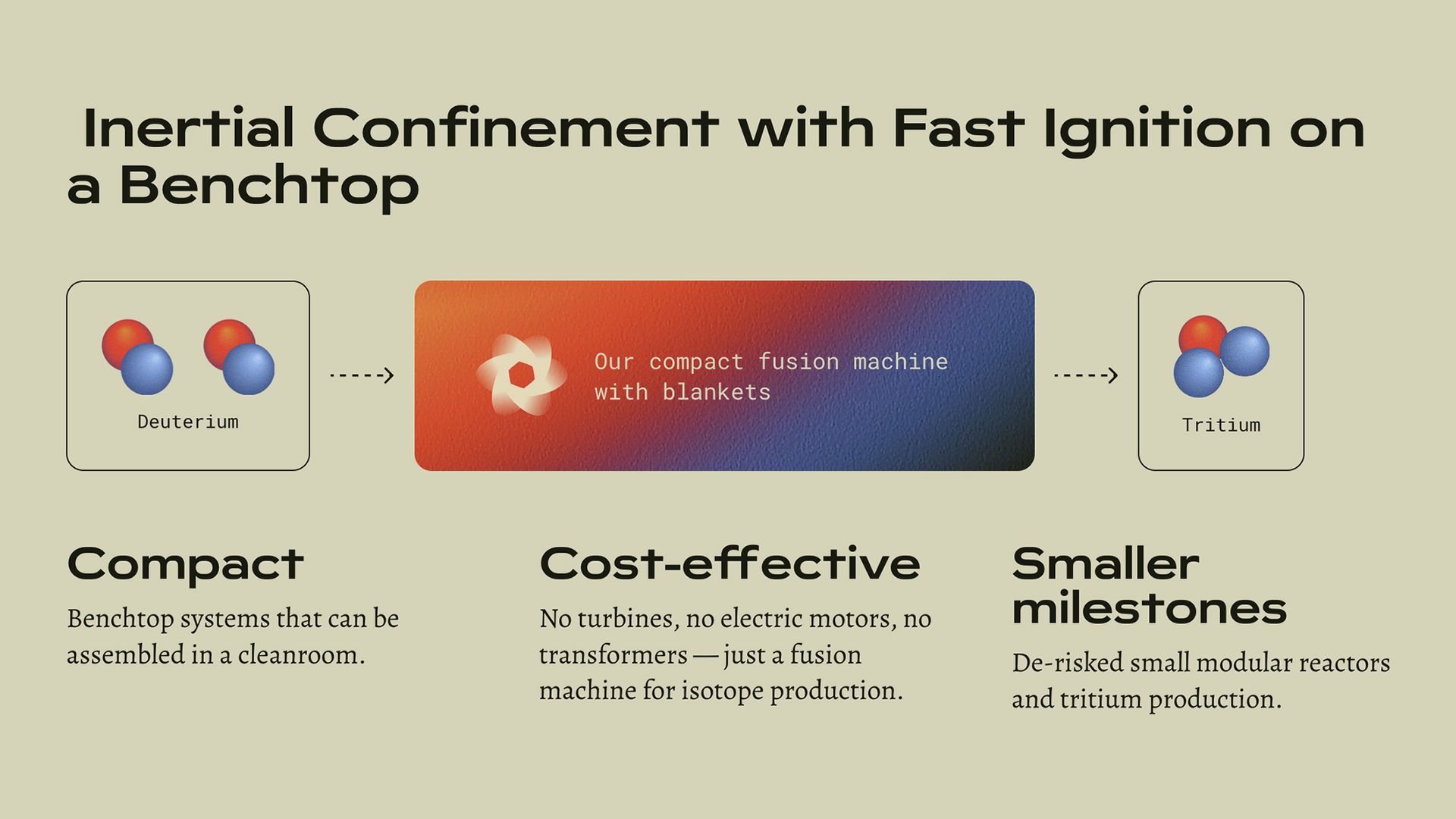
Yun Kai, co-founder and CEO of Cambridge Heavy Industries, describes the company’s fusion device as “tiny” and “benchtop” sized, which means experiments can be carried out and improved upon quickly. The technology will eventually be scaled up, but the aim is to build something smaller than conventional reactor designs — the size of two basketball courts approximately, rather than a full power plant complex.
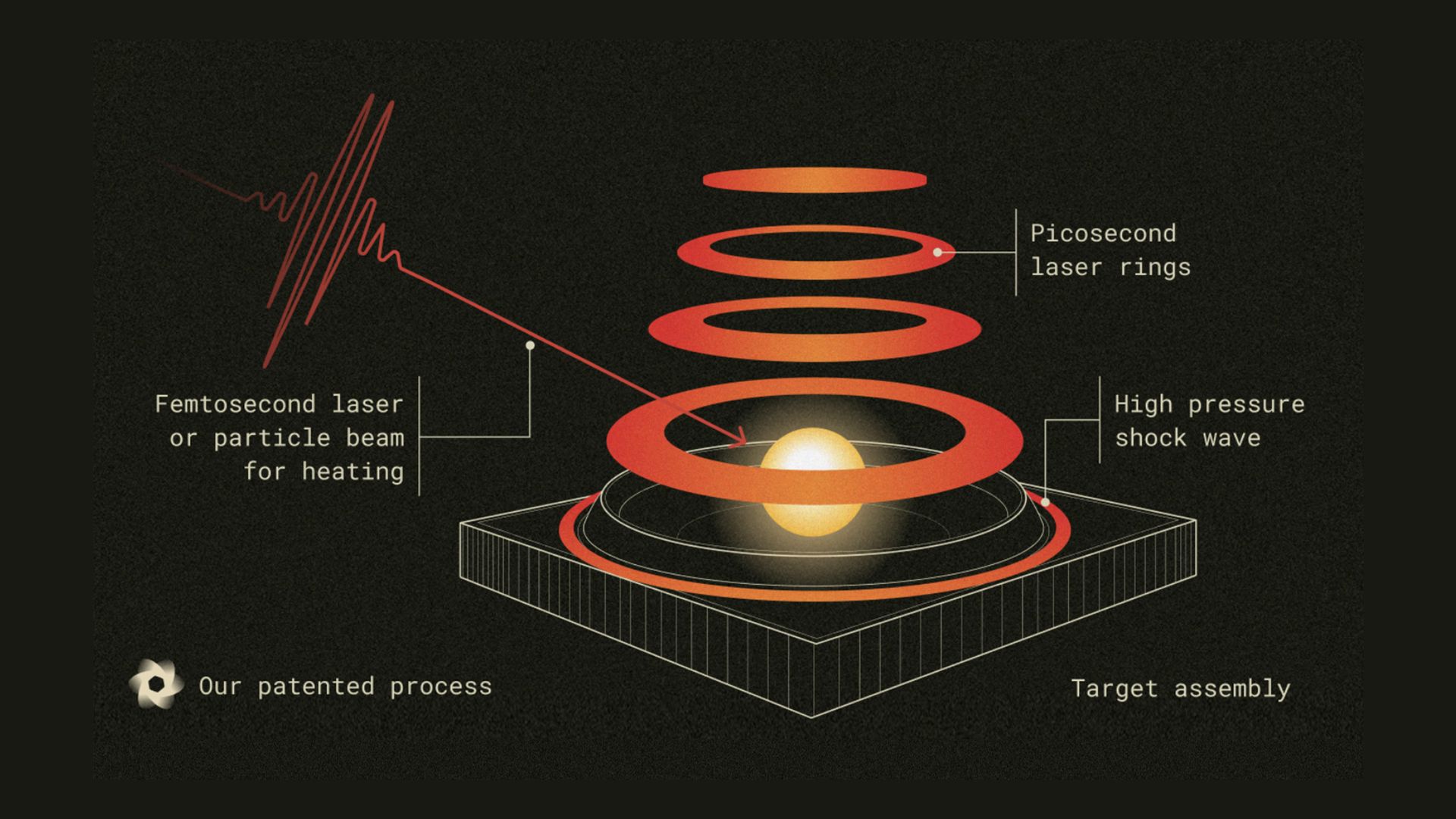
What makes the approach of Cambridge Heavy Industries different is the dual laser setup. The first laser delivers its light as concentric rings that hit the block of fuel, designed to create shock waves traveling inward that create an accelerating compression effect; the second laser then hits the wave at the perfect spot to produce the super-high pressure required for ignition and nuclear fusion.
The enclosed system effectively acts as its own self-contained, compact fuel factory, because everything is moving inwards. It’s also designed around a 2D rather than a 3D setup, which means fewer angles to cover — the laser fusion setup at the National Ignition Facility (NIF) in the US uses an array of 192 lasers in three dimensions to compress its own fuel blocks, for example.
As it’s smaller and more efficient, the Cambridge Heavy Industries benchtop device can get through 50–80 laser shots per day — at the NIF, it’s just a handful. A relatively low amount of laser power is required, says Kai, and as dozens of experiments are being done every 24 hours, the system can be quickly analyzed and iterated over time.
There is one big caveat: the tabletop device at Cambridge Heavy isn’t doing the same job as the NIF reactor or any other reactor in development, not yet. For now, it’s focused on making one of the fuels required for nuclear fusion, tritium, rather than generating electricity. The actual reactor and plant stages will come later.
What happens next
For nuclear fusion to happen, two light atoms need to be smashed together. The best combination, scientists think, will be deuterium and tritium — and while there’s a lot of deuterium around, there’s not much tritium at all. At the moment, most of what we have comes from older nuclear fission power plants that are being phased out.
The long-term plan is for nuclear reactors to make their own tritium alongside producing electricity, but with reactors not expected to come online until the 2030s at the earliest, there’s a window of opportunity before then that Cambridge Heavy Industries is hoping to make the most of.
TechCrunch points to a recent study that suggests the tritium shortfall could be as much as 28 kilograms (62 pounds) for the industry as a whole by 2054. At today’s prices that works out at around $840 million (£631 million / AU$1,209 million) worth of the isotope — a potentially lucrative market.
There’s also a lot of money, potentially, in nuclear fusion in general, which is why investors are putting capital into the development of future fusion plants. It’s worth bearing in mind that while nuclear fusion reactions have been produced in the lab for decades, we’re not yet at the stage where they can practically produce electricity — that’s still some years off.
A steady supply of tritium and more efficient, compact nuclear fusion reactors will certainly help us get there faster though, and that’s what’s driving Cambridge Heavy Industries. If the technology can be fully developed over the next few years, it promises to be a genuine game-changer for energy production and supply.
Go to Source
David Nield