
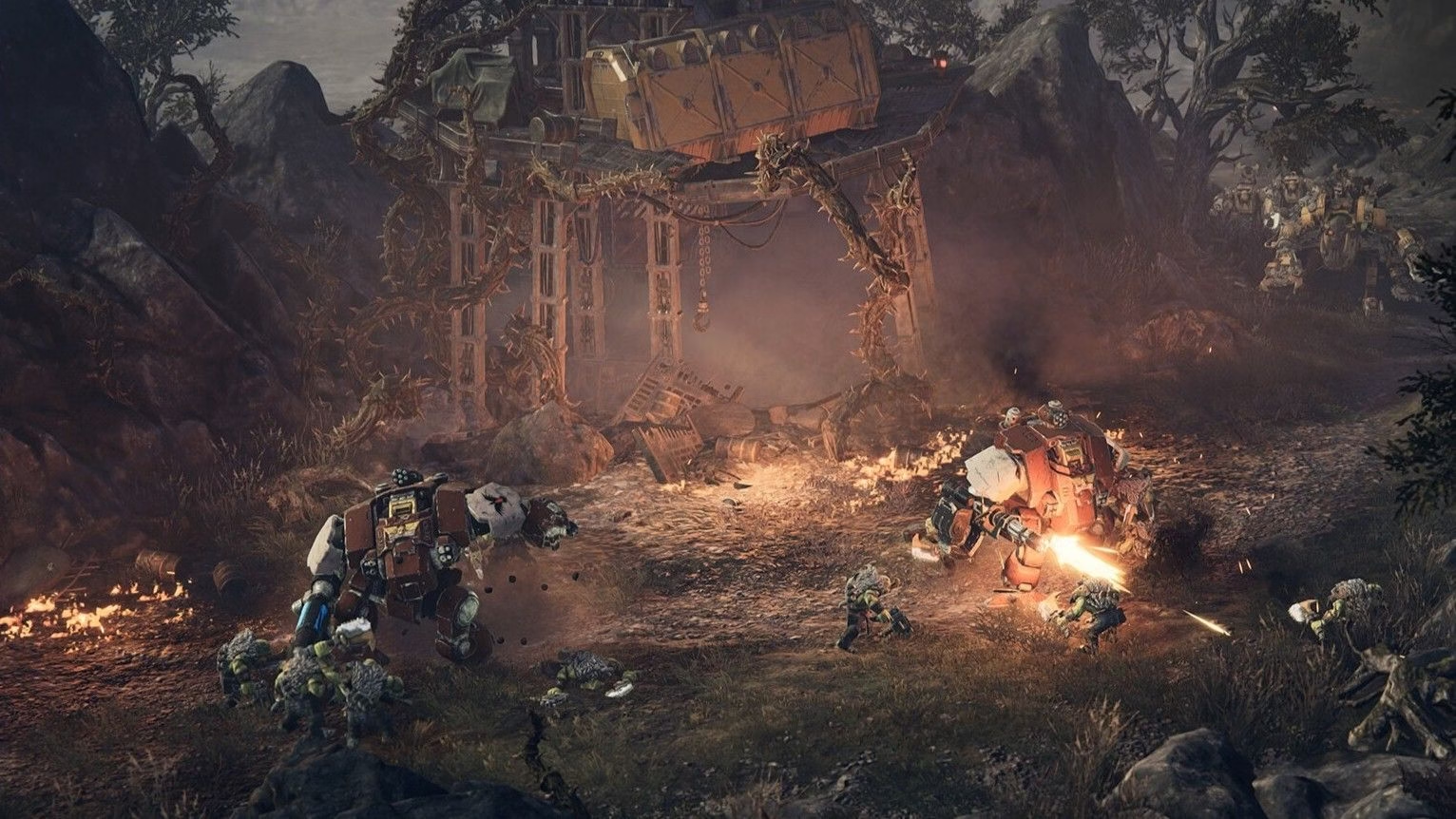
It’s been a long time since I’ve poured so many hours into Warhammer 40,000, but playing a bunch of the Dawn of War 4 campaign has absolutely captivated me, and almost made it feel like I was playing from my living room floor 30 years ago all over again.
After seeing a glimpse of the game last summer, I knew it was on the right track, but after a couple of weeks with Dawn of War 4, it’s safe to say that the series’ rip-roaring, gritty action, and moreish strategic map play is back with a vengeance, and channels all that made the first game brilliant.
My time with the chunky preview build has shown that King Art Games are an incredibly safe set of hands for the next Dawn of War game.
Going back to Kronus
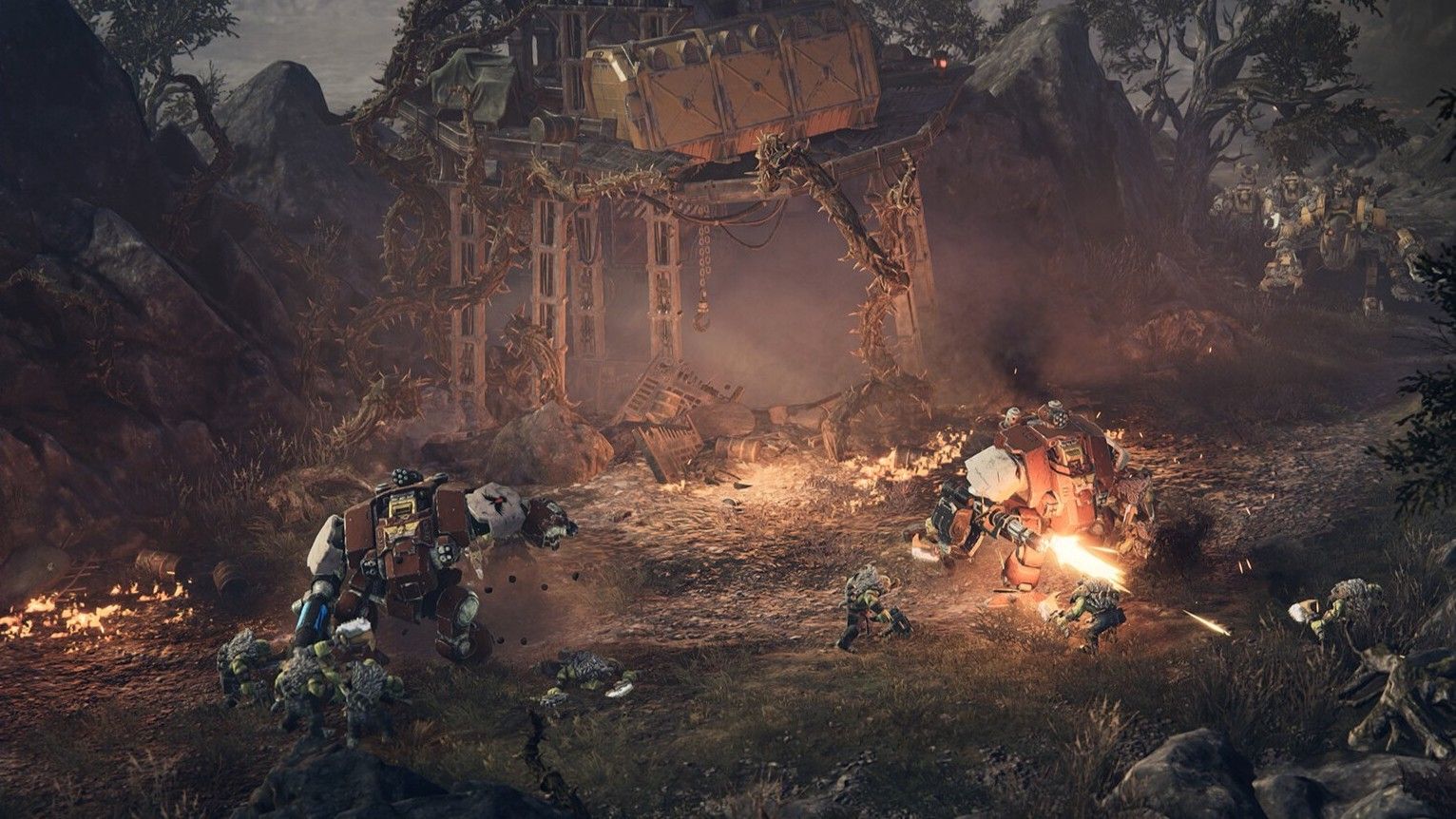
The planet of Kronus provides the setting for Dawn of War 4, and while a part of me wonders whether it might have been more exciting to go for a brand new setting and premise, the familiar planet is still superbly executed by the new developer.
Each map is extremely well detailed and feels alive with wind-blown sand and tumbleweeds across barren landscapes, blinking lights and crumbling epic architecture in urban maps, and wonderfully icy and snowy maps providing some of the best backdrops.
No matter where you are, though, you’re always cheered on by some mega, epic battle music, and the individual unit audio from ambient mechanical whirring, distinct machine clunking, and furious fighting are all absolute chef’s kiss level.
Underneath the aesthetic excellence, there is a real meaty campaign here. My preview build dived in and out of a few armies’ storylines, and the branching narrative is interesting and genuinely compelling, with twists that you can make decisions to impact through mission selection and choices (from what I’ve seen), while the accompanying cutscenes are also fantastic.
Even the in-game story moments help to give me the feeling of those excellent battle write-ups in the old White Dwarf magazines that I remember poring over for hours at a time.
Unrivaled units and chaotic combat
Moving your forces around that campaign is the true highlight: this is a properly meaty and fabulous strategy experience, and a 40K experience.
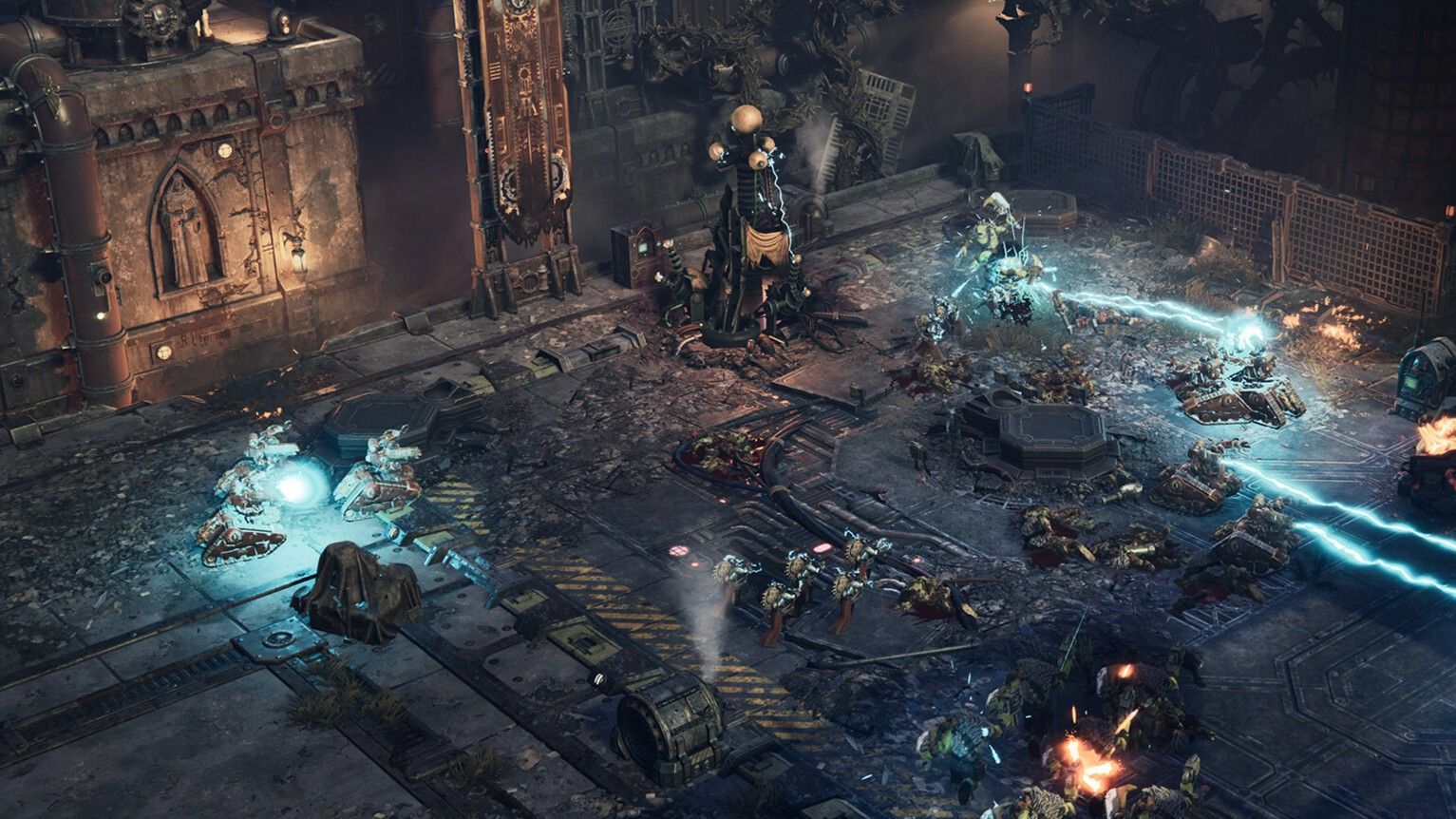
Taking control of the Orks or Adeptus Mechanicus in my preview, it really does feel like the perfect real-time recreation of seeing your miniatures on a tabletop. The action can be slower and methodical; or you can embrace some chaos and have fights on multiple fronts as you aim to use speed to your advantage over the battlefield.
There were multiple times in both scenarios where managing large masses of a mix of units was a genuine thrill, with each resource point captured, the mowing down of enemy infantry, or the blowing up of tanks with grenade barrages more satisfying than the last.
The power fantasy is real in Dawn of War 4
If you remember the best thing about moving units across maps in the Dawn of War games of yesteryear, then you’re in for a treat. Orks feel as wild and chaotic as they should; and the Adeptus Mechanicus have wonderful machine-focused units as well as biomechanic infantry that can pack more of a punch than you think, especially from cover.
However, Dawn of War 4 simultaneously feels more modern, and there’s an effort to streamline some controls to make things more straightforward. You can drag over a whole heap of enemies, and your units will automatically attack the ones most vulnerable to their attack type; and you can right-click on any unit’s ability so it will automatically trigger during missions.
Engaging with the units — be you a more casual player, or a really experienced one — is superb, and starts with them being a treat for the eyes. Units really look the part, and every combat encounter does too. King Art Studio’s attention to detail, with bespoke combat animations for every combination (it seems) that look genuine, and plenty of blood splatter and rag doll physics on show. Even the armor and weaponry of all units look radiant and detailed, down to the lustre on metals.
The machine endures
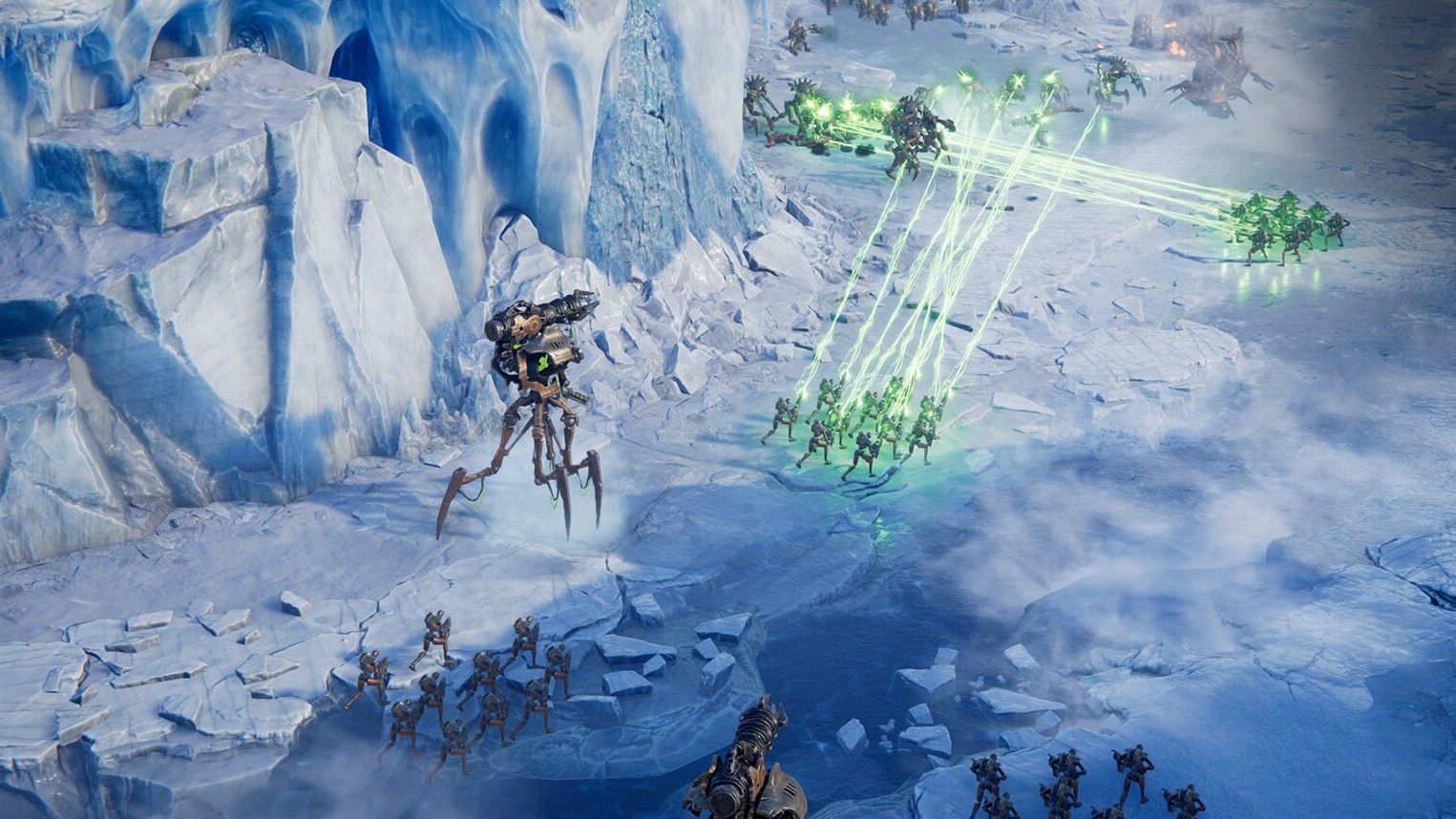
There’s a good mix of missions that keep things interesting and elevate the branching campaign, too. That’s a really great thing in a particular way, as my one ‘gripe’, if you can really call it that, is that Dawn of War 4 continues the series’ trend of sometimes being purely a numbers game.
Especially in base-building missions; if you can pace your play a bit, secure your territory, and build an army that’s massive, you’ll rarely fail. This can offset the nuances and ‘other’ factors to think about too when managing Orks and the WAAGH! that fuels them in battle, and the Adeptus Mechanicus and the Nosphere links that strengthen buildings and open up more development options.
That’s why the mix of missions is welcome: while those base- and army-building ones are heavily present, there’s usually a gauntlet or defence mission around the corner to mix things up — and I’ve probably enjoyed the latter two more on the whole.
Dawn of War 4 successfully takes me back to early 2000s LAN parties
Not that dominating a map is unenjoyable, of course. The power fantasy is real in Dawn of War 4 and can feel fantastic, but the game is also wonderfully successful at creating those ‘If I can just make it to that resource point’ or ‘if I can just hold off this enemy encounter’ or ‘if I can just create a couple of units quickly ot turn the tide here’ kind of moments, which are a thrill.
I could talk about more of the individual features in the game that make it shine, but the most important thing about my time with the game for preview is that everything adds up to an authentic Dawn of War experience and really captures the feeling and the essence of the series — as well as translating the turn-based tabletop game into a real-time action setting once again.
Dawn of War 4 successfully takes me back to early 2000s LAN parties, devouring campaigns over and over again, and building massive armies to crush my foes as I did in the first game over two decades ago — and now I just want more.