
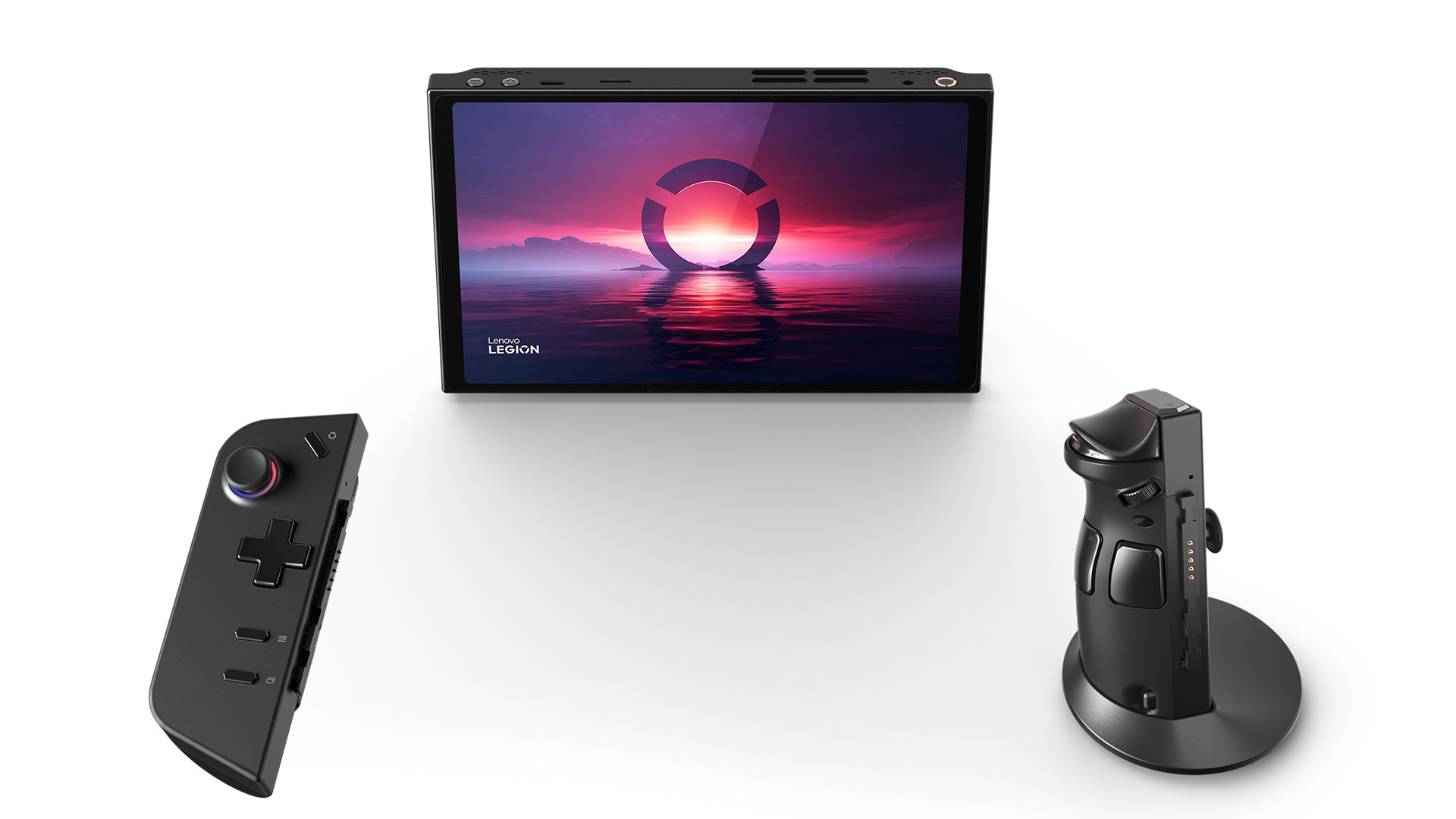
First it was the Steam Deck then we had the Asus ROG Ally, and now Lenovo is jumping into the fray as the company has officially revealed its new handheld gaming device – the Legion Go.
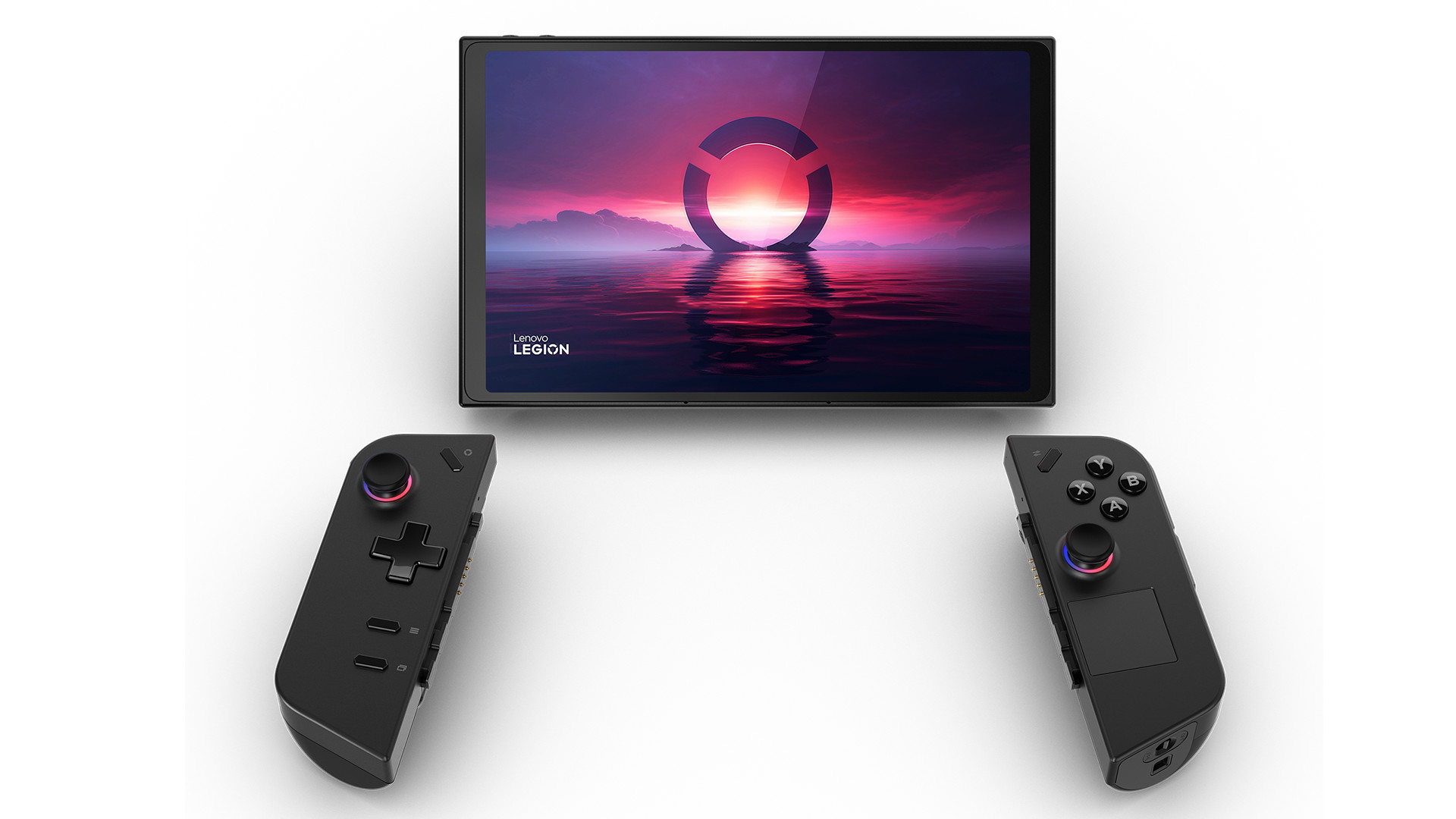
Arguably the most eye-catching aspect out of everything the Lenovo Legion Go has to offer are the detachable TrueStrike controllers. Similar to the Nintendo Switch Joy-Cons, they feature two joysticks, a directional pad, and a variety of face buttons. Fairly standard stuff.
But that’s where the similarities end because these TrueStrike controllers are capable of so much more. In total, you have 10 – yes, 10 – mappable shoulder buttons: two triggers, two bumpers, four in the back (two on each controller), plus an extra pair of inputs on the edges.
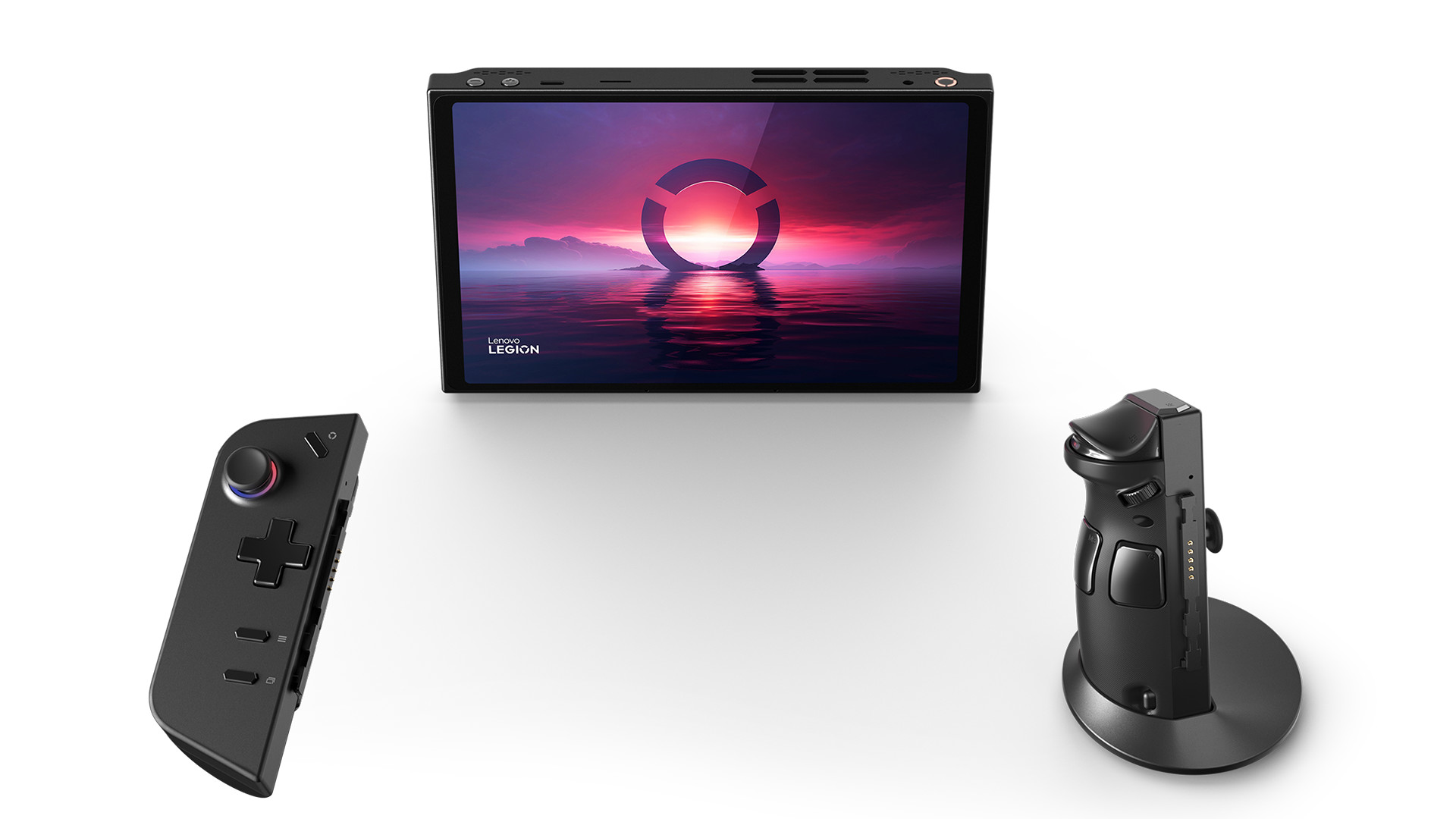
If that wasn’t enough, the right controller has a track pad on the front for controlling an on-screen cursor with a mouse wheel on the back for scrolling. On the bottom of the controller is an optical “eye”. When placed inside the accompanying stand, the “eye” can help the peripheral serve as a rudimentary gaming mouse.
Needless to say, the Legion TrueStrike controllers on the Legion Go totally blow the Switch’s Joy-Cons out of the water. It even comes with RGB lighting around the power button. Not only that, Lenovo’s hardware sports “hall effect joysticks” meaning no frustrating controller drift like you might experience on the Switch.
Notable features
Of course, there is more to the Legion Go besides the controllers.
The display is a 8.8-inch Lenovo PureSight gaming touchscreen, according to the company. With an aspect ratio of 16:10, it outputs a Quad HD Plus (2560 x 1600 pixels) resolution with a refresh rate of up to 144Hz. The display is “capable of up to 500 nits [of] brightness”, covering “97 percent [of the] DCI-P3 color gamut”. Essentially, the screen looks fantastic.
Under the hood you have an “AMD Ryzen Z1 Extreme processor” alongside an AMD RDNA graphics card which is the exact same type of hardware present on the ROG Ally. It also has 16GB of LPDDR5X RAM on board. So if you have tried out the ROG Ally, you can expect a similar level of performance on the Legion Go.
Storage peaks at 1TB although you can expand it by an extra 2TB via micro-SD card.
With all this hardware, the Legion Go will be quite power hungry. Lenovo is equipping its handheld with a 49.2Wh (watt-hour) battery. It supports the company’s proprietary Super Rapid Charge tech, “allowing the battery to recharge up to 70 percent” in about 30 minutes.
Other notable features include power bypass mode to “protect the battery from [deterioration]” and a kickstand on the back to prop up the Legion Go.
Availability
Color us impressed. Lenovo is entering the handheld scene guns ablaze. Neither the Steam Deck or Ally have opted for detachable controllers. We’re curious to know if Lenovo plans on releasing the TrueStrike on their own so we asked. This story will be updated if we hear back.
The Lenovo Legion Go launches on October 31 with prices starting £699/€799. That’s roughly $875 USD, making it more expensive than both the Steam Deck and ROG Ally.
If you’re looking for something to play on your newly acquired Legion Go, be sure to check out TechRadar’s list of the best Steam games for 2023.